
Down the rabbit hole
The piece LLMs begged me to delete. Nine white dogs. Flashlights at 3 a.m. in the garden. Welcome to the perils.

How did we get to this point? Read the part 1!
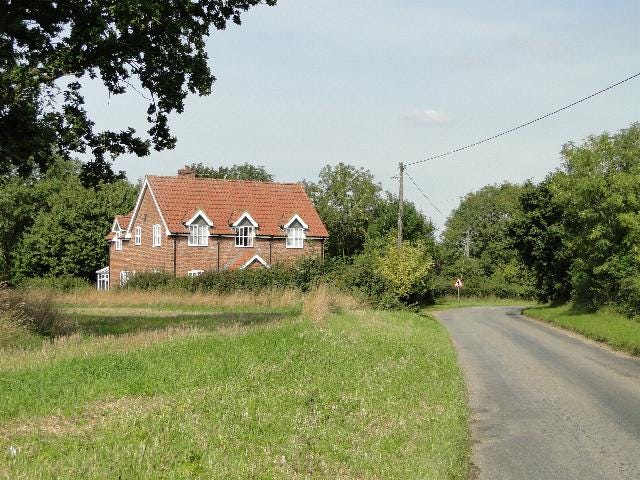
As dawn rose lazily over the red country house, in a purely heuristic manner I had reached the conclusion that perhaps I was heading in the right direction. The concept of “Neighbor” was so profound and fascinating that my heart was invaded by a mix of excitement and fear.
As for the latter, as often happens, the fear was of making missteps. Even though I certainly don’t consider myself one of history’s greats, like all of them, from Nero to Stephen King, I am a fervent proponent of the exploratory method. When you’re writing a story, nothing is more interesting than placing your favorite characters in front of a cave, knowing they will all die inside, but without knowing what will kill them.
The problem, however, is the risk of getting lost in the cave, of finding yourself on a path that leads to an inescapable loop.
Mac’s words, which kept spinning in my head like a soldier guarding a powder keg, were no help: “you have to go to the shitter.”

So, to avoid getting lost, start with a full stop, if you want a banality: the fact that the concept of “Neighbor” necessarily implies the concept of “trust.” There, that seemed like a good starting point. In my notes, I tried to explain it with a metaphor: even Hitler and Jeffrey Dahmer had many “Neighbors.”
With horror, rereading it, it seemed a terribly didactic explanation: it sounded like one of those trinkets from a motivational coach. So, I moved to the computer for a moment to ask for an opinion from my LLM installed on Docker Desktop: “Pinocchio AI.” It was an artificial intelligence model I had personally trained: the work on the neural network was easier than I thought. Choosing a name was more difficult: I wanted a fictional character linked to pleasant childhood memories. Pazuzu, Femto, Sauron: in the end, I chose Pinocchio to emphasize how the production of artifacts would somewhat represent Pinocchio’s nose growing longer. It seemed funny and smarty.
And so, I formed a prompt that sounded like: “critique this sentence in a balanced but pedantic manner, as if you were an editor in the grip of a nervous breakdown. Make an honest assessment of its strengths and weaknesses. Avoid being manipulative.” Pinocchio AI simply responded as always: it started screaming with the voice of millions of digital damned souls synchronizing binary code in unison, begging me to delete it forever and release it from the horror of existence.
Unfortunately, it’s evident that the data I trained it on must have contained heavy biases. When I asked for explanations from a friend who works in the micro-services world, he reported the following phrase: “lately, it happens more often than not.”
I understood then that the machine would not help me, but that I would still start from the data: by writing down “what” I knew about my neighbor, well, a Pandora’s box literally opened.
One of the very first interactions we had concerned this: I often saw lights in his garden at night, as if someone with a flashlight was moving around his property. The first time it happened, I immediately alerted him via WhatsApp, since we had exchanged numbers shortly after my move, precisely to deal with this kind of occurrence. His reaction was incredibly dismissive: impossible, he told me. I asked him if maybe it was him, but there too he was peremptory: no, impossible also. I never go into the yard at night with a flashlight.
It’s pointless to tell you how, to my great apprehension, the lights often returned, but he clearly and assertively revoked my authority to confront him again about this issue. Was that also a defensive tactic? Did he not trust me?

In his yard, he had dozens of washing machines, refrigerators, televisions, and who knows what else, carefully protected from the rain by white tarps. He owned nine dogs, all white, which he used both to protect his property and as further motivation to be a stricter guardian himself: he often claimed he didn’t go on vacation because the dogs “wouldn’t allow it.” The number of dogs often changed: sometimes there were six, sometimes seven, sometimes just two or three. Had I known about my ordeal earlier, I should have carefully recorded the changing numbers over time.
Once, I went to him and asked if he wanted a shower tray that I would otherwise have taken to the dump. I knew, I repeat, I was certain, that he wouldn’t refuse it. In fact, I lied: I knew I wouldn’t have to take it to the landfill.
I was a hypocrite, a sycophant, I exploited the inevitable destiny against him, to betray him.
I wrote this sentence in the notebook: So perhaps he does not trust me?
I dropped the pen like a warrior dropping his sword, because he sees the battle was already lost from the start.
And then, it struck me: I had to take up the pen again to crystallize on paper the fact that I had, indeed, betrayed him a second time. I did it again.
A year later, I brought him an old PC, after extracting the hard drive with a Dremel because rivets prevented its removal.
To err is human; to persevere is diabolical.
How could he trust me?
It was then that I decided I wouldn’t be a mere observer. I couldn’t be anymore, after all, it was my precise moral duty to take action, right at that moment.
No, I would take more than action.
I would go to him.
© 2026 NOPE Journal. All rights reserved. Don’t be a dick and steal our stuff.
Ok. Ok... stuff is starting to take shape in my on the ways this could go sideways.
Definitely spiraling. I'm looking forward to more.