
Didrik's guide to assertivity
How to have a fruitful communication and enjoy fruits of a fructous life

Let’s talk about a character’s emotional arc. After all, we’re on a newsletter platform that is constantly parasitized by dime-a-dozen writers trying to get famous by putting their demons on paper (exhibit A: Didrik Dahl, a.k.a. the person writing this article). We’re here to talk about characters’ emotional arcs.
I want to tell you that what I’m about to say could get me struck off the register, but let’s press on anyway: the character we’ll start with is the psychologist. That gentleman who sits you down on the little couch and proceeds to listen to you while pretending to find what you say interesting, doodling dicks in his notepad, thinking about how great it would be if AI finally invented robot concubines to stick his member into. And at the end he even charges you a hundred bucks for forty-five minutes that get rebranded as “an hour.”
The ontological narrative arc of the psychologist is extremely interesting and will help us understand how best to achieve what he himself explains: preventing others from screwing us over. Which is the same as saying: avoiding screwing ourselves over. Which is the same as saying: starting by not letting psychology screw us over.
In the meantime, for the record: let me give you a piece of news to start from. The news is this: reality doesn’t exist, it’s all in your brain. Don’t believe me? You’re already whining: what about what I see on the news? What if I start walking across the highway? What about my wife who ran off with my best friend, my husband who only married me for my father’s money? These are all bullshit hang-ups that have to do with something else: the impact the material world has on our bodies. Everything else is spirit alone — otherwise there’s no explaining why, if someone tells you “your mother’s a whore,” you take it as an insult and punch them instead of simply replying “actually, that doesn’t match my understanding of her.”
But we’ll get there too — this is, after all, a practical guide. Now, let’s look at the stages of the psychologist’s existence, remembering that ontogeny recapitulates phylogeny (I have absolutely no idea what I just said, but if I recall correctly it should work fine in a context like this).
Ancient Greece/Rome: the psychologist is essentially a philosopher who tries to solve people’s problems by talking to them. There are a lot of entertaining and accurate insights, like the theory of humors; women are basically not taken into consideration.
Middle Ages: the cause of mental illness is the devil, so if you plant an axe in your father-in-law’s forehead, you can comfortably blame it on Belial. Women still don’t exist.
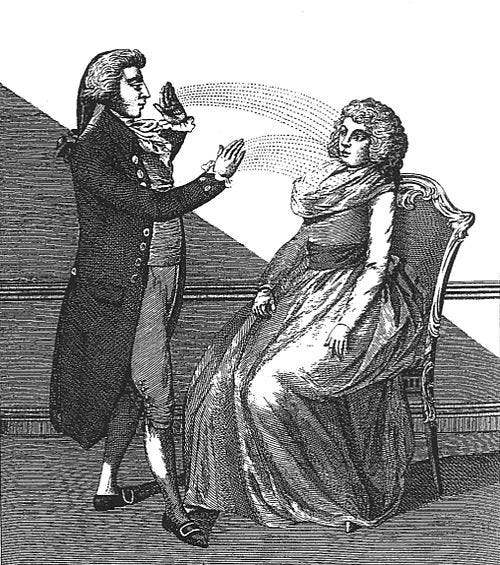
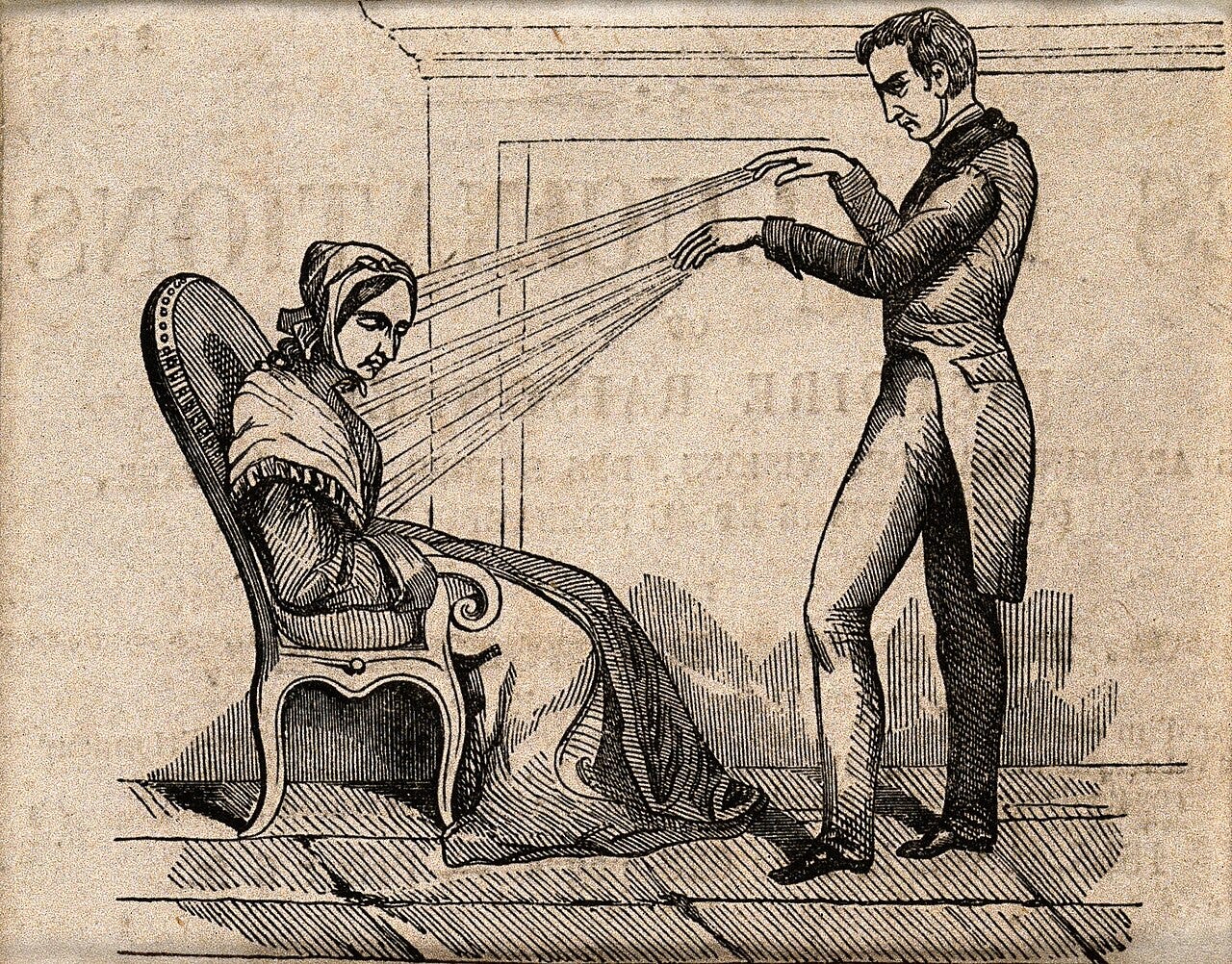
The Enlightenment: mental illness becomes a serious matter. And like all serious matters, it requires a pragmatic solution: locking people with problems into dedicated dungeons and leaving them to die, devoured by rats. Women still aren’t around, but there are wild experiments in mesmerism going on.
Romanticism: during this period, a special forces unit operating in Vietnam was unjustly convicted by a military tribunal. Having escaped from a maximum-security prison, they realized that to redeem themselves from their incel status they had to carry out crazy and futile operations, like unifying the Kingdom of Italy. So here’s to the madmen — but women still don’t exist.
Freud: the psychologist is essentially a philosopher who tries to solve people’s problems by talking to them. There are a lot of entertaining insights, some even accurate; his patients are mostly women, but somehow the conversation still revolves around the “phallic stage” and the “Oedipus complex” — always in the context of manosphere dynamics.
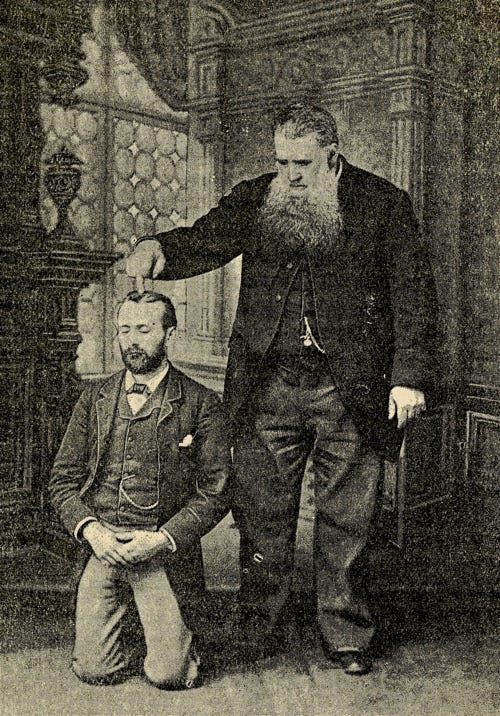
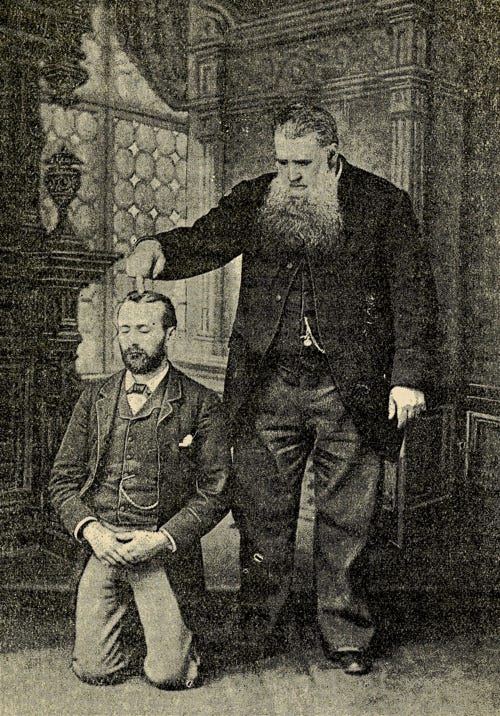
DICKHEAD
To cut a long story short, we arrive at the 1960s, in which the modern psychologist — who has no qualms about irreversibly depleting the planet’s resources by feeding nonsense to claude.ai or Grok — finally decides to turn on the PC and develop the theory of the black box.
What is the black box? Simply put, the dark source of all drives and desires. Picture “the Room” in the film Stalker: an enormous pain in the ass, yet surrounded by incredible traps that may or may not exist, with the whole thing caused by a nuclear catastrophe.
We cannot enter the room because, as Stalker teaches us, there’s nothing inside anyway. We must stay outside, at the doorway, and try to communicate with others from our vantage point.
And here, ladies and gentlemen, we finally find the dead canary in the mine. How can I — a man who can’t even tie his own shoelaces but holds a psychology degree and is duly registered with the professional board — teach you to communicate effectively?
Answer: we’ll use examples. Three cases, each different, for truly effective communication.
The guardrail

This defensive technique comes directly from experience in the world of education. The school environment can be described with this metaphor: the educator is like a little beaver. The student is like a raging river — enormous, torrential, with absolutely no desire to stop and learn — and so the beaver must build a dam. But the river is huge, steep, unmanageable. Yet, little by little, the brave beaver gathers branches, puts them together, refuses to be discouraged, and builds a tiny inlet that, even if it isn’t a proper dam, is a small step forward.
And what happens at the end of the day, when the sun sets and the beaver is tired but happy, having built something beautiful? A terrible noise fills the valley along with the river — the sound of large, menacing machinery — and the air fills with the acrid smell of exhaust fumes. The learner’s parents have arrived, and with a bulldozer they destroy the little beaver’s dam.
Now, in a situation like this, the only thing that can save you is adopting strategies. Not because these strategies will actually accomplish anything, but because you’ll be able to say that “the failure was intentional.” The strategy is to have a strategy.
Mark didn’t make the PowerPoint slides for his oral exam because you didn’t feel like making him do it? “I deliberately chose not to have him make them, in order to place greater emphasis on the verbal register. I feel he performs better there than in the visual register.”
Jessica copied her entire assignment straight from ChatGPT? “It’s actually a strategy — rather than blocking AI, we’re promoting conscious and responsible use.”
John spent the whole day playing Minecraft instead of studying, and you said nothing? “We’re working together on soft skills, team communication, and performance indicators. It’s been proving quite effective with kids lately.”
The strategy is to have a strategy.
The Han Solo
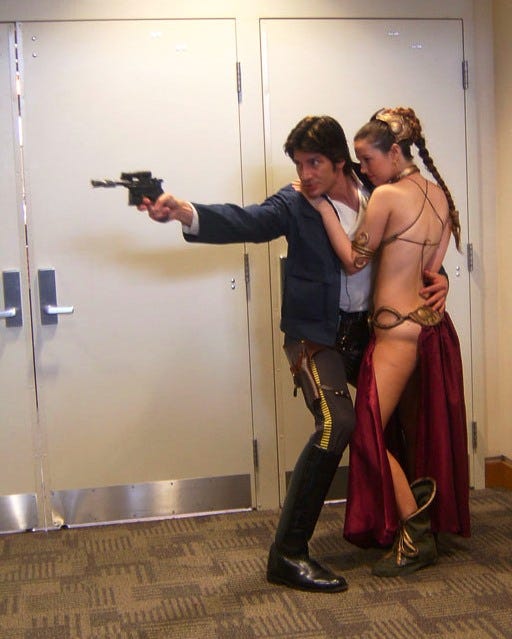
This technique is learned by working in rehabilitation communities. Here is the only serious moment in this sea of bullshit: I have no intention of making fun of drug addicts. This section means to laugh with them, not at them.
After all, for all the wrong reasons, there’s a lot of laughter in rehab communities.
How can you not laugh when Cosimo (fictional name) hurls a chair at the plasma TV? After months of pestering everyone to get a new plasma screen? The reason: “You made me watch Napoli beat Juventus.”
How can you not laugh when you’re in the courtyard of this charming rural community, sweeping and pulling weeds, and a car full of hillbillies speeds past and the passenger practically climbs out onto the roof to scream at you — the staff member — HEY YOU DRUGGIE SCUMBAAAAAAAG.
One day at the community, Big Thomas (fictional name — in Italian, Tommasone) gave me a great lesson in defending yourself from your own crap. The situation was tricky: he had come back completely wasted after a supervised day out (he had spent months tormenting everyone, claiming he wanted to visit his family).
Solemnly, having to justify his behaviour in front of the community— the meetings were held every morning — he stood up. Total silence fell over the room and everyone, residents and staff alike, looked at him, waiting for his address. It did not disappoint. Simple, lean, worthy of a rhetorical genius.
He wiped his lips with the palm of his hand, raised his chin, and drew a long breath with his eyes closed, as if savouring the air — then opened them and spoke.
“I take full responsibility for what I did.”
As if there were any other option. As if it hadn’t been his own nose doing the vacuuming.
An absolute masterpiece. Repeated in the days that followed: he kept saying, “For what happened, I took full responsibility. I never once hid behind excuses.”
A masterpiece. Rule number two: whenever you do something stupid, always announce in front of everyone that you take full responsibility. The more solemn you are, the better. It works every time.
The Very Hungry Caterpillar

Let’s be clear.
This isn’t about you. It’s about me.
All this beautiful, seemingly meaningless wall of text was just a way to get you here, to the last section. It literally took me months to come up with two anecdotes worth telling, and the only real goal was one: to trick you, so I could vent about my family story.
When you went to school in Italy, back when school still existed and social networks didn’t (which means reality actually existed; sure, people barely got laid and everyone was bored as fuck, but at least you sometimes left the house and video games were clearly superior), in that magical period they made you study La coscienza di Zeno (Zeno’s Conscience).
In that book there are tons of things nobody gives a shit about, like the fact that it was written using as a narrative device a psychologist colleague who blackmails the protagonist with his own notebooks full of doodled dicks.
I was supposed to get to this point in the article and tell you how Zeno Cosini, the protagonist, experiences inadequacy through the constant comparison with his father figure. And how I spent my whole life thinking Zeno was a pathetic asshole and the book was an absolute pain in the ass, only to later discover that I am Zeno Cosini, and that book perfectly predicted the dynamics of my adult family life.
Yes, I wanted to talk specifically about the moment when Zeno’s father, on his deathbed, slaps him. I wanted to draw a parallel with my own situation (translation: I was going to ask ChatGPT to help me make that parallel, using a critical but modest tone, fragrant but sober prose, baroque yet hormonal style), but I’m not going to do it. And do you know why I’m not going to do it?
Because the last rule of the manual is this: never trust anyone. Ever.
Not Zeno Cosini, not your parents, not my parents, not this manual.
If it needs explanations, you can contact me privately. One hour costs 100 bucks, but let’s be clear: it’s 45 minutes.
Nah, I’m playing the dick, as usual, to fight the gloom.
If you need me, I’m here.
Didi
© 2026 NOPE Journal. All rights reserved. Don’t be a dick and steal our stuff.
an exquisite and insightful exploration into psychology, communication, and doodled dicks.